You probably do not think much about your water tank. It sits quietly on the roof or in the yard, doing its job. When you turn on the tap, clean water comes out, but what if the water inside that tank is not as clean as you think? Hiring a professional water tank cleaning service is one of those household tasks that is easy to overlook, but it is vital for your family’s health and well-being.
That stored water is what you use for everything. You use it for drinking, cooking, and bathing. The cleanliness of that tank is directly linked to your health, so having a clean water tank is essential.
A regular water tank cleaning service protects you from things you cannot even see. It is a fundamental step in maintaining a safe home environment.
Table of Contents:
- What’s Really Lurking in Your Water Tank?
- The Hidden Health Risks of a Dirty Water Tank
- The Professional Water Tank Cleaning Service Process: A Step-by-Step Look
- Why You Shouldn’t DIY Your Tank Cleaning
- Industrial and Commercial Tank Cleaning Services
- How Often Should You Clean Your Water Tank?
- Choosing the Right Water Tank Cleaning Service
- Conclusion
What’s Really Lurking in Your Water Tank?
It is an out-of-sight, out-of-mind problem. Ignoring your water tank lets some pretty unpleasant things grow inside. Over time, sediment from the main water supply settles at the bottom, creating a thick layer of sludge.
This sludge becomes a breeding ground for all sorts of nasty contaminants, and effective sludge removal is critical. You might find rust from old pipes flaking off into your water. You might also find a slimy layer called biofilm coating the inner walls of the tank.
This biofilm is a community of microorganisms sticking together. It protects bacteria and other pathogens, letting them thrive. This can make your water taste and smell bad and poses a real health threat that builds up over months.
Insects, lizards, and other small pests can also find their way into poorly sealed tanks. They get trapped and decompose, which contaminates the entire water supply. This is more common than most people would like to believe, and the idea is unsettling for good reason.
The Hidden Health Risks of a Dirty Water Tank
The gunk building up in your tank is not just gross; it can make you sick. Contaminated water can lead to a host of health issues. These problems can range from mild discomfort to serious illness.
The most common problems are stomach-related. Bacteria and viruses in the water can cause gastroenteritis, leading to cramps, diarrhea, and vomiting. Skin issues are another big concern, as bathing in water filled with bacteria and algae can cause rashes and other skin irritations.
People with sensitive skin or conditions like eczema are especially vulnerable. As stated by organizations like the World Health Organization, clean water is a foundation of good health. For some people, the risks are even greater.
The elderly, young children, and people with weakened immune systems can get very sick from contaminated water. These groups have a harder time fighting off infections. Making certain their water is pure is incredibly important, especially for households or even medical companies that depend on it.
One of the scariest things that can grow in stagnant water is Legionella bacteria. Inhaling tiny droplets of water containing these bacteria can cause Legionnaires’ disease, a severe and sometimes fatal type of pneumonia. This risk is why facilities like hospitals and large buildings have such strict water management rules, but the same risk exists in your home tank if it is not maintained.
The Professional Water Tank Cleaning Service Process: A Step-by-Step Look
So, what actually happens when you hire professionals? A good water tank cleaning service follows a detailed, multi-step process. This makes certain every part of the tank is spotless and your water is safe.
The tank cleaning process is much more than just a quick rinse. Understanding the steps can help you see the value in hiring a team of cleaning experts for the job and what to look for when choosing a company.
- Draining the Tank: The first step is always to empty the tank completely. The team uses a high-speed pump to drain the water. This reveals all the sludge, sediment, and grime that has collected at the bottom and on the walls.
- Sludge and Debris Removal: Once empty, the real work begins. The crew gets inside the tank, following strict confined space entry protocols. They manually remove all the thick sludge and any other debris, often using a vacuum truck for efficient sludge removal.
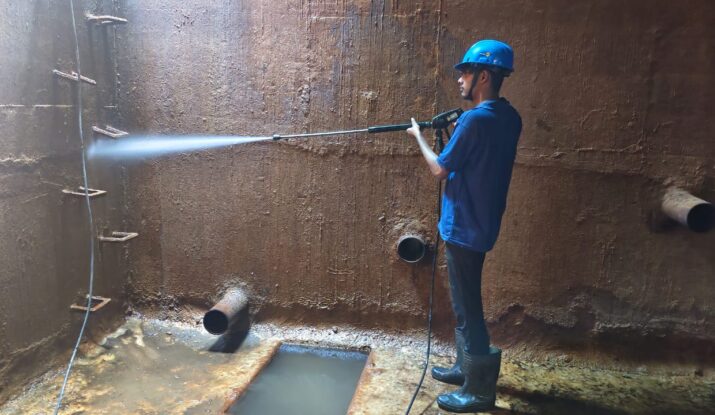
- High-Pressure Cleaning: After the loose debris is gone, they use high-pressure water jets or power washing equipment. This blasts away the stubborn biofilm and algae stuck to the tank’s walls, ceiling, and floor. This powerful spray can reach every nook and cranny.
- Disinfection and Sanitization: This is a critical step in the cleaning service. The cleaners apply a safe, eco-friendly disinfectant to all interior surfaces. This kills any remaining bacteria, viruses, and other microorganisms that could compromise your water tanks.
- Final Rinse and Refilling: The tank is then rinsed thoroughly with clean water to remove any leftover cleaning solution. After a final inspection to confirm it is spotless, the tank is refilled with fresh, clean water. Your water supply is then ready for safe use once again.
- Post-Cleaning Check: Reputable services often perform a final check. They might test the water quality after the refill to confirm everything is perfect. They also check that all connections are secure and the tank is sealed properly.
Why You Shouldn’t DIY Your Tank Cleaning
You might be thinking about cleaning the tank yourself to save some money. It seems simple enough, right? But tank cleaning is a difficult and potentially dangerous job.
There are very good reasons why it’s best left to professionals. They have the right tools, training, and safety knowledge that you likely do not possess. The risks involved often outweigh any potential savings.
The Dangers of DIY
First, there are serious safety concerns. Many water tanks are considered confined spaces. Working inside them without proper training for space entry can be very dangerous.
Poor ventilation can lead to a lack of oxygen or a buildup of toxic fumes from cleaning agents. The Occupational Safety and Health Administration (OSHA) has strict guidelines for confined space entry for a reason. These regulations are in place to prevent serious injury or death.
Then there is the risk of using the wrong chemicals, which could be considered hazardous waste if not handled correctly. You might accidentally use a cleaner that is not safe for drinking water. This could contaminate your water supply with harmful residues and lead to major health issues.
You also risk damaging the tank itself. Using the wrong tools or harsh scrubbing can scratch or puncture the tank’s lining. This can lead to leaks and rust, creating bigger problems down the road.
The Professional Advantage
Professional teams come prepared with the right equipment for all field services. They have industrial-grade pumps, high-pressure jets, and vacuum truck services. This equipment cleans far more effectively than any home tool ever could.
They are trained in safety protocols for working in confined spaces, including machine cleaning and vessel cleaning. This protects both them and your property. Their expertise goes beyond just water tanks, often extending to other industrial cleaning services.
Professionals use disinfectants that are both powerful against germs and safe for potable water. They know exactly how to sanitize the tank without leaving behind harmful chemicals. They also manage proper waste disposal for the materials removed from the tank.
They get the job done quickly and efficiently, minimizing the time your home is without water. Trying to do it yourself could take all day or longer. These tank cleaning experts bring a level of skill that cannot be matched by a weekend project.
Industrial and Commercial Tank Cleaning Services
While residential water tank cleaning is important, industrial tank cleaning is a whole other level of service. Businesses, manufacturing plants, and medical companies have complex needs for clean water tanks. An industrial tank often holds materials other than potable water, such as industrial water for processes, chemicals, or wastewater.
These industrial tank cleaning services are a critical part of a company’s maintenance and safety program. A contaminated tank can halt production, damage expensive equipment, or create a hazardous environment for employees. The cleaning process for an industrial tank is far more involved and requires specialized knowledge and equipment.
Companies that provide these industrial services are equipped to handle a wide range of challenges. This can include pit cleaning, wastewater treatment facility maintenance, and the safe removal of hazardous waste. Their technical services often include hydro excavation, which uses pressurized water to remove soil and debris without damaging underground utilities.
Many of these environmental services providers also offer emergency spill response. If a tank leaks or an oil spill occurs, their teams can be deployed quickly to contain the situation. These emergency response crews are trained for oil spill response and other urgent scenarios, minimizing environmental impact and getting operations back to normal.
Leading companies offer these services across wide regions, with field services available in locations like Puerto Rico and the Virgin Islands. They understand that for a business, having clean tanks is non-negotiable. Whether it’s for a treatment facility or a manufacturing plant, a professional cleaning service is a sound investment.
How Often Should You Clean Your Water Tank?
This is a common question, and there is not one single answer for everyone. A good rule of thumb is to have your water tank professionally cleaned at least once a year. However, some situations may require more frequent cleanings from a tank cleaning service.
Several factors can influence how quickly your tank gets dirty. It is smart to consider these factors when you create a maintenance schedule. The quality of your local water supply plays a big part, as water with a lot of minerals or sediment will cause buildup faster.
| Factor | Suggested Cleaning Frequency |
|---|---|
| Standard Municipal Water | Once every 12 months. |
| Hard Water or Well Water | Once every 6-8 months. |
| Tank is Very Old | Once every 6 months. |
| After Nearby Construction | One-time cleaning after work finishes. |
| New Home Purchase | Clean before moving in. |
If you live in a dusty or industrial area, dirt and pollutants can enter the tank more easily. This calls for more regular cleanings. The age and condition of the tank matter, too; older tanks might have rougher surfaces that trap more dirt.
If there is construction happening nearby, dust and debris can contaminate your tank. It is a good idea to schedule service for a cleaning after the construction work is complete. When you move into a new house, you have no idea when the tank was last cleaned, so getting it done gives you peace of mind.
Choosing the Right Water Tank Cleaning Service
Finding a reliable company is important, as you are trusting them with your family’s water supply. You do not want to hire the first name you see online. A few simple checks can help you find a trustworthy and effective water tank cleaning service.
- Check Their Experience: Look for a company that has been in business for a while. Experienced crews, or cleaning experts, know how to handle different types of tanks clean and situations.
- Read Reviews and Ask for References: See what past customers have to say. Online reviews can give you a good sense of their quality and reliability. Don’t hesitate to ask for references you can contact directly.
- Ask About Their Process: A good company will be happy to explain their cleaning method step-by-step. If they are vague, it is a red flag. Check that they cover sludge removal, power washing, and proper disinfection.
- Confirm They Use Safe Chemicals: Ask specifically what disinfectants they use. Inquire about their safety data sheets to verify the chemicals are safe for potable water systems.
- Get Clear Pricing: Ask for a quote upfront. A reputable company will give you a clear, detailed price without hidden fees. Some may offer a customer portal for easy access to quotes and to schedule service.
- Verify Insurance and Licensing: A professional service will have liability insurance. This protects you if something goes wrong. Also, check for any required local licenses or certifications for their environmental services.
- Inquire About Emergency Services: It is good to know if the company offers a 24-hour emergency spill response. This shows they are a serious operation equipped for urgent situations like an oil spill or other contamination events.
Asking these questions helps you pick a company that will do the job right. It gives you confidence in the services provided. A clean water tank means safer water for everyone in your home.
Conclusion
Your water tank is an essential part of your home’s water system, but it can also be a source of health problems if it is not maintained. Dirt, sludge, rust, and bacteria can build up over time. This can turn your fresh water supply into a health hazard.
Regular cleaning is not a luxury; it is a necessity for protecting your family’s well-being. While you might be tempted to do it yourself, the risks of improper cleaning and confined space entry are just too high. A professional water tank cleaning service has the right tools, knowledge, and safety protocols to get the job done right.
They can make certain your tank is completely clean and your water is pure and safe for drinking, cooking, and bathing. Making this service a part of your annual home maintenance plan is a simple but powerful step. It is an investment in your family’s health and your own peace of mind.